Mobile rebuild
Overview
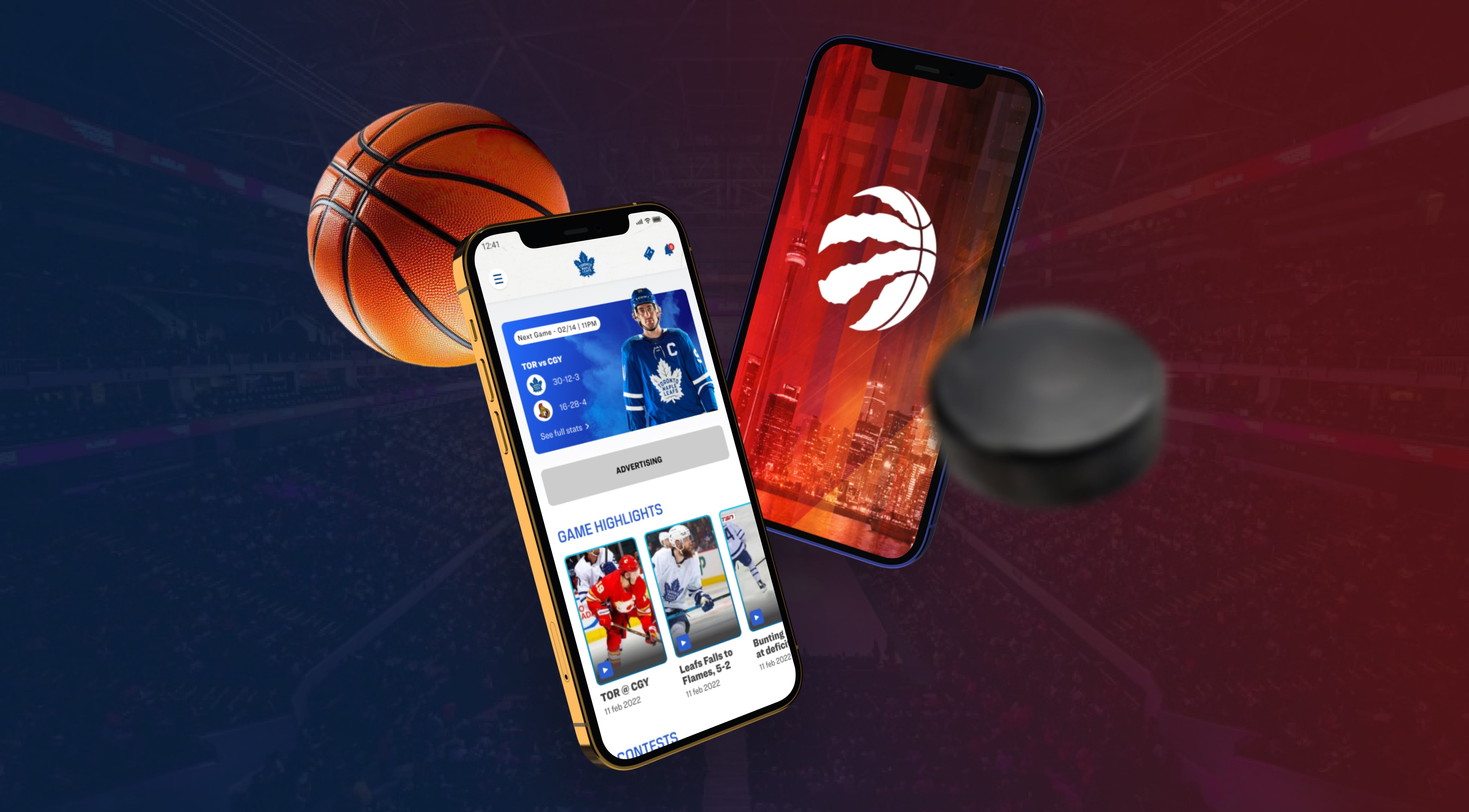
The existing teams apps were built and managed by a third-party, which limits the governance by the teams owner, MLSE. Fans often left negative feedbacks about the apps' confusing navigation, about how the news are not posted in real time and lack of exclusive content.
They end up resorting to other sports apps to get all the information they are looking for. Another problem was: some of the features inside the app were conflicting against each other for the users attention, and each one had a different interface, so the experience was not smooth.Maple Leafs and Raptors are two of the most famous sports teams from Toronto, Canada. Their fans are passionate and want to know/see/collect anything about them.
DISCOVERY
The first step was to select fans to talk to. We wanted to understand their feelings about the teams, which features they most wanted to see in the apps, and how their lives were impacted by the Leafs and Raptors
✦ We interviewed 18 people, all remotely, including 4 season-seat holders;
✦ 5 of them left feedbacks about the apps prior to the interviews, so we had inputs about specific issues;
Most important outcomes:
✦ They love the press conferences and videos and this was something we should take advantage of;
✦ They got frustrated and downloaded other sports apps, but kept the Leafs and Raptors apps because they see them as "the source of truth" - when any news is released in the app, they are sure it is a legit information;
✦ They would like a digital memorabilia: a place to win prizes, collect digital tickets and play around, with the possibility to share everything with friends;
Persona
With the information collected, we created two personas to guide us through the project: one representing die-hard and other representing casual fans. We analyzed: behaviors, pain points, expectations and ways of consumption.
Product
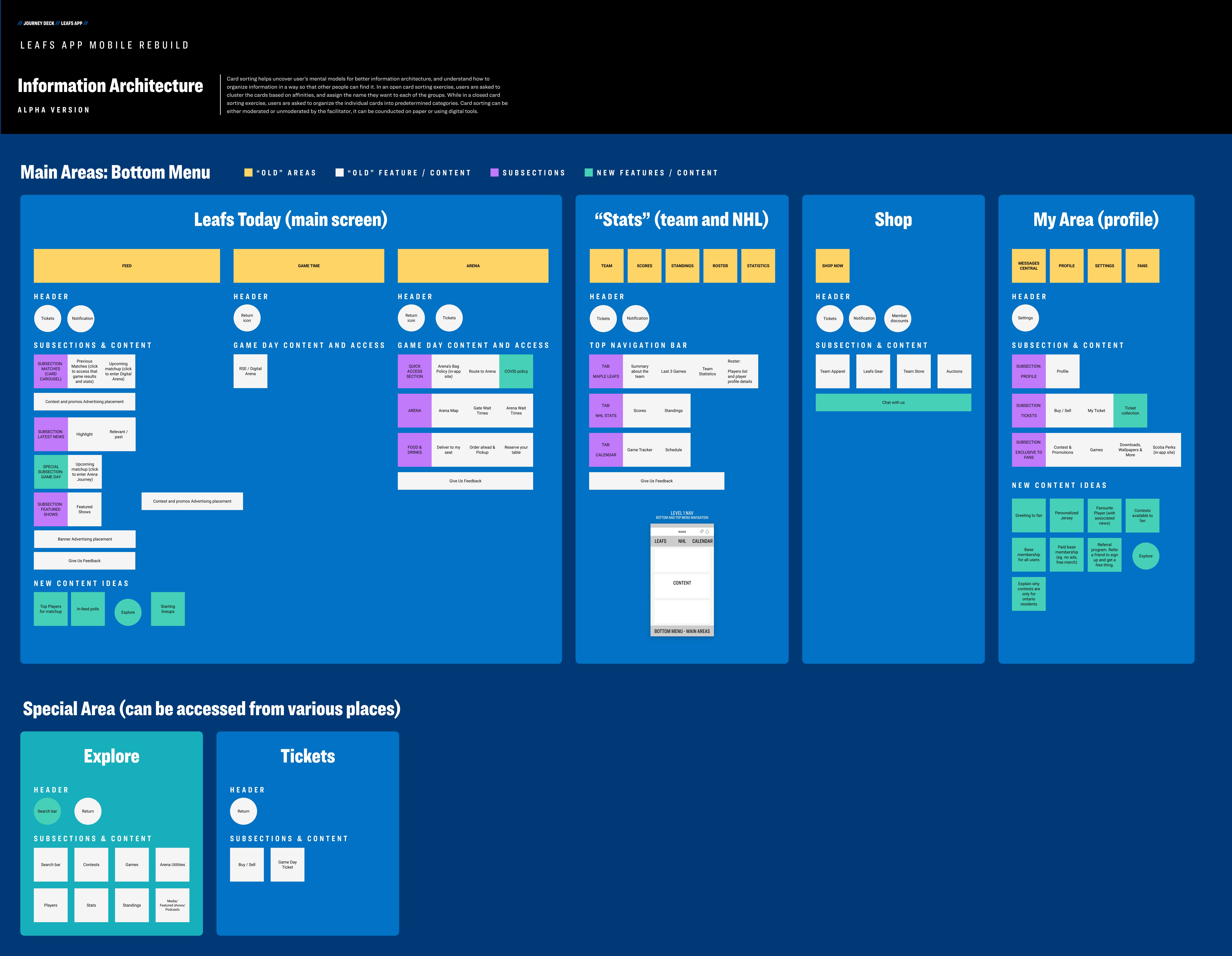
Based in those findings we defined: product vision and goals, features that were essential for an MVP, features to be included after the first release and a backlog for the future.
Essential:
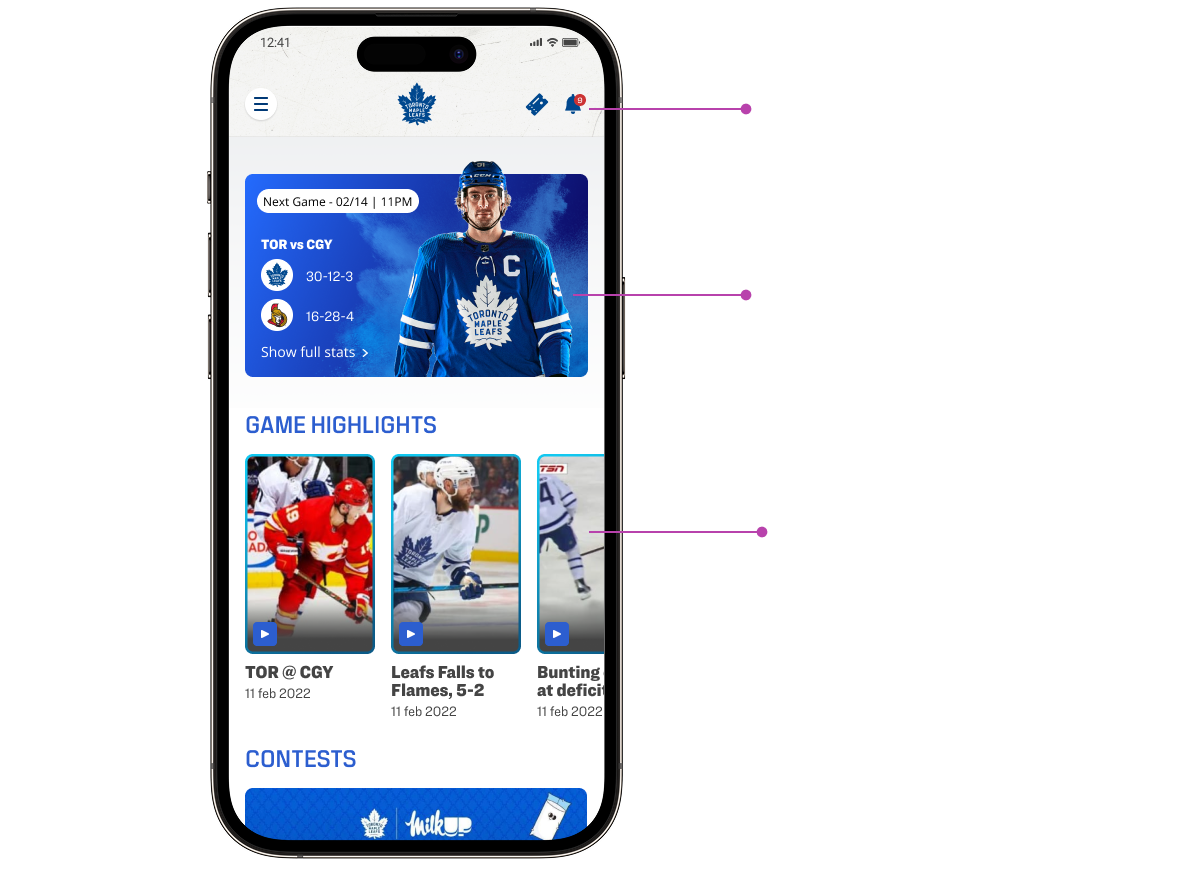
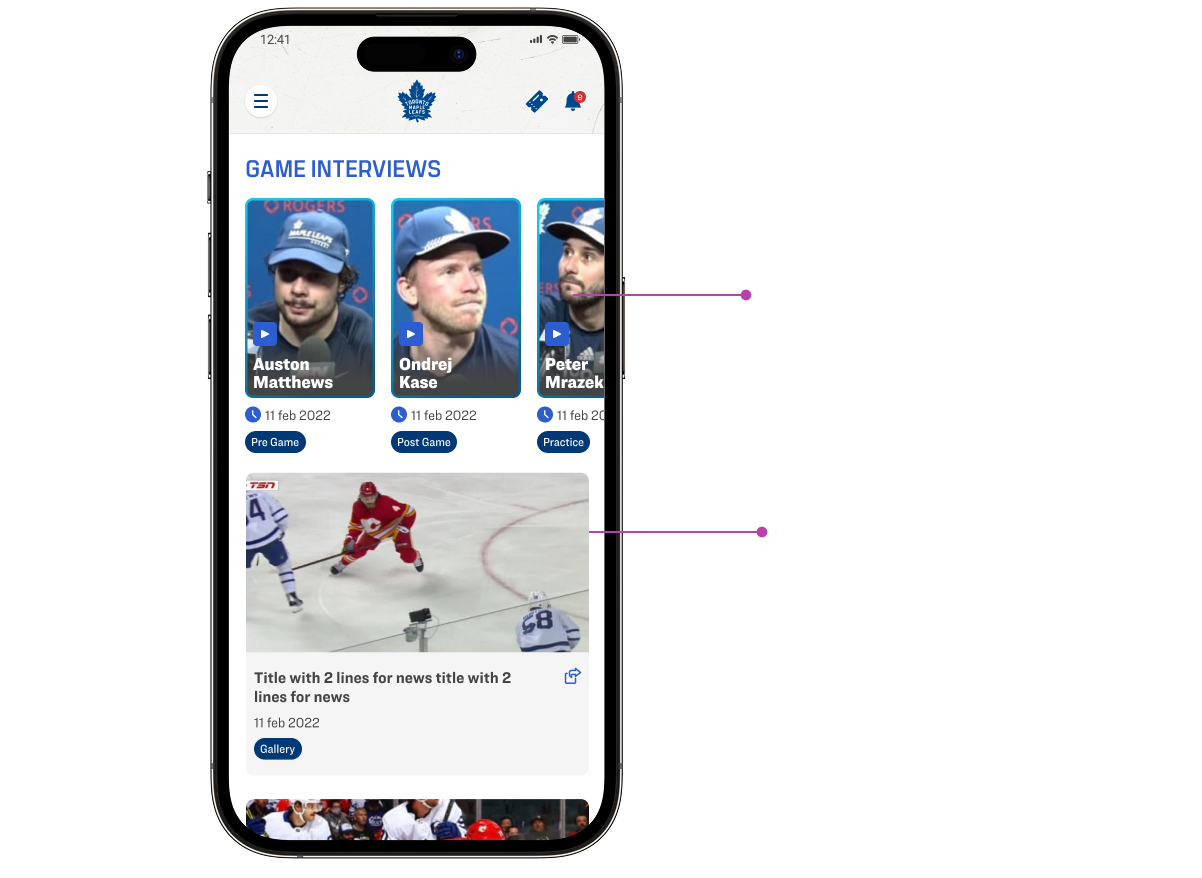
✦ A homepage focused in different types of media;
✦ Robust and personalized notifications;
✦ New information architecture.
Results
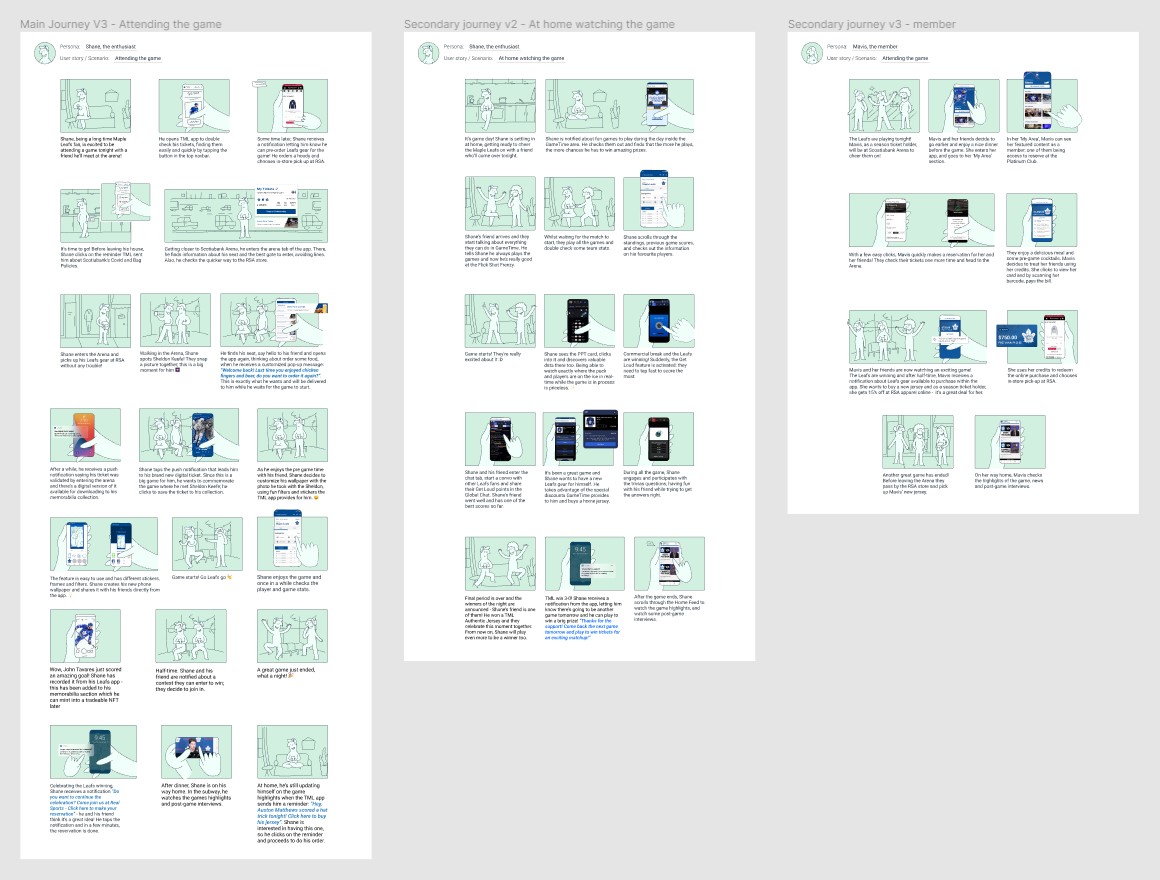
After presenting the concept of the new app, the stakeholders had the opportunity to provide feedback. However, they expressed difficulty in fully visualizing the complete product based only on the MVP shown. To support the long-term vision, we decided to create a more visual representation to assist them.
Using the die-hard fan persona, we created storyboards where the main character used the new app on game days, whether watching at the stadium or at home. This allowed us to showcase the use of various features in different situations.
We develop all the app strategy and research. Now what?
In retrospective, one thing that I learned from research is that each part of the process will give you a different insight and, at the time, you need to manage data with expectations, combine everything and create an experience that HAS TO BE aligned between users need and the company. Also, you need to walk side-by-side with the stakeholders and involve them in all the phases, so they can relate to what you are creating.
The next steps are to run Maze tests of the prototype and call back our fans, so they can test it too, this way we can be sure we pushed the project in the right direction.